Friday, 18 July 2008

Upscale Outhouse -- That's Essentially the Vibe of the Toilets at the Abbey

Abbey Wine & Beer Bar
117 1/2 N Woodland Blvd
Deland, FL USA
www.abbeydeland.com

Where is it?

This is a somewhat modes storefront set off the main road in downtown Deland. But it turns out to be a spacious spot and it's got a somewhat straight forward layout to it, making finding the toilets easy.

From the front entrance, head to the back of the place. Once there, look for a hallway opening in the back wall. Head down that hallway, and you'll see the toilets on your right, men's room first, then the women's further back, towards the end of the hallway.

What's it like?

This is a dark, somewhat sophisticated upscale beer and wine bar. While you can get your standard mass markets here, the beer- and wine-savvy staff and vast collection of hard-to-find titles make it a great place for the more adventurous drinker -- especially one with a love for Belgian ales, in which the place specializes. (Hence the name.)

A large, heavy wood bar sits in the front left corner of the place. A roomy dining room spreads out behind it. At the bar, you'll find plenty of coolers holding various bottles of beer and wine, as well a tap with about 20 beer selections ranging from hard-to-find imports to several unique American micro-brew selections. If you're unsure of what to have, work with the bartender -- he/she will let you sample a number of items until you find the perfect match.

The place also offers a handful of sandwiches and other various munchies, which are good filler for the beer, though if you're looking for a substantial meal, you may want to visit somewhere else before or after, since the portions here tend to be a bit on the small side.

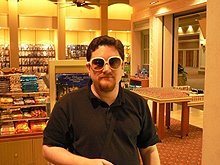
The beer and wine are the focus here, after all, and if you enjoy good beer and good company (such as my friend Ayal Wolf, pictured above), then this is the place for you.

Given the dark, sophisticated nature of the interior, you'd think the bathrooms would be similar in design -- like the elegant Davio's in Philadelphia, or, on a smaller scale, the homey Las Brazas Chicken. Ironically, they are not like that at all.

More than anything, they look the the sort of bathroom you'd find at a BBQ joint (like Cecil's, for example).The walls are covered in unfinished wood planks, and the floor is covered in that standard rust-colored tile you see at many other places.

All the fixtures kind of serve as piece-meal extensions of that wood paneling. The urinals and vanity just look like add-ons that were included after the fact, like matted chrome faucets, decorative iron wall hangings, cheesy framed mirrors and more.

And then there's the toilet, which comes set behind a saloon door and is set into a wooden shelf, making the stall itself look very much like an old-country outhouse. (It should be noted that the stall is somewhat small and that saloon door that doesn't quite open all the way -- making it hard for people who are larger than 5 feet in height to get in or sit comfortably while they are inside.)

In fact, the overall vibe of the place is that of an outhouse -- a complete 180 from the interior, if you think about it. It's very rustic and Southern and backwoods in inspiration, and clearly the design is purposeful, funny and kitschy. So much so that I wondered if the toilet serves as a statement, saying that while we aim for sophistication on the outside, inside we're all the same and we all have to use the toilet and that's that.

I like the message, to be honest, and I like the kitsch of the design. But I'm just not sold 100% on the execution. Like I said, the aforementioned stall was a bit too tight of a fit -- it should be a bit more comfortable to use and enter and exit. And the toilet water in the commode was alarmingly blue in color -- almost like well-chlorinated pool water instead of water colored by a Tidy Bowl insert. What's with that?

Also, one of the urinals was not working and the lighting was a bit dimmer than it needed to be. A place this kitschy requires bright lights, so people can marvel at the effort taken by the designers to put it together and laugh with it. It's not a place for subtlety, such as the bar and dining room areas.

Another note: It's also a very clean bathroom and practically odor-free, which is an accomplishment worth mentioning since it's a beer bar at heart and it's located in a college town.

Marks out of 10:

7. As mentioned earlier, I like the attempt, but I'm not sold on the execution. Sorry.

Comments to the Management:

Make the lighting a little brighter. Fix the broken urinal (maybe already a moot point). Make that stall a little larger and easier to get into. And what's with that blue water?

Tuesday, 15 July 2008

Toilets at Montparnasse 1900 Evoke Classic Spirit of Art Nouveau Era

Montparnasse 1900
59 Boulevard du Montparnasse
Paris, France

Where is it?

This is a long, slightly slender place, with the kitchen in the very back, a bar and greeting area/coat-check area up front and a dining room in the center. (Supposedly, there's also a banquet hall and cigar bar, though I didn't see them.)

To get to the toilets, head through the bar and dining room, towards the back of the place. In between the kitchen and dining room is a small enclave containing a sitting area, some displayed art (both paintings and a few items held in a glass case) and the toilets, which are behind some darkly stained wooden doors. The men's room has a little bronze boy hanging on the door; the women's has a little bronze girl on it.

What's it like?

This unassuming eatery is located just a block or so away from Tour Montparnasse, Paris' tallest skyscraper building. While walking the streets here, you may have trouble locating the place because its facade and awning are very modest and from the outside it looks very similar to the other eateries around it. (To find, just look for the awning with "Montparnasse 1900" written on it.")

Still, this is definitely a place to seek out, as it provided me with the best dining experience I've ever had in Paris, at least for a bistro-type experience. The affordable menu comes filled with classic French dishes, like steake frites, endive and Roquefort salad, freshly shucked Normandy-caught oysters and much more, and each dish I had was expertly prepared and outrageously delicious. (The price fixed menu offered three courses, plus dessert and cheese and white for about 35 euro, which isn't that bad, really.) The big surprise here was the use of rump steak for the steak frites -- I thought it would be chewy, considering the cut, but it ended up being moist, tender and very flavorful -- one of the best I've ever had, to be honest.

The decor here is decidedly art nouveau in spirit. The place is covered in stain glass and metalworks, along with fanciful sculptures and paintings. The high point is the ceiling, which is a sprawling single glass mural portraying a view of autumn trees and leaves.

The toilets appropriately extend the art nouveau feel of the dining room. The room has two sections. The main area contains the urinals and sinks, both white porcelain. The walls here are dark mahogany wood, the mirrors and fixtures made of bronze, the lighting dim but not too dim. It's a lot like stepping into a turn-of-the-century boudoir, only without the seedy undertones. Similar in look and feel to La Cave, but without the modernist touches.

The back half of the bathroom has two toilet stalls, each one a single chamber that -- thanks to a full-sized door -- is separated completely from the rest of the place, which in turn means lots of privacy to the user. Those stalls are covered floor to ceiling with shiny white tiles and feature a classy white porcelain toilet in them with a dark wooden seat. The only ornamentation found inside is the stainless steel toilet paper roll holder hanging (albeit a bit too high) on the wall.

Marks out of 10:

8. Very classy art nouveau setting in a fantastic art-nouveau-inspired restaurant.

Comments to the Management:

Not much to suggest here. It's a great place, from the dining room on back. If anything, I would suggest adding a little more light in the bathroom stalls, which weren't dim but weren't that bright either. Also, if possible, lower the toilet paper holders a little to accommodate us shorter people some.

Wednesday, 9 July 2008

La Cave Toilets Offer Modern-looking Art Nouveu Touches, Numbered Toilet Paper Rolls

La Cave
Boulevard Pereire Sud
Paris, France

Where is it?

From the front entrance, head towards the bar, which is located in the center of the restaurant.

Once there, go left, keeping the bar on your right. Just past the bar, you'll see a twisting staircase going downwards. The bathrooms are down there, behind some very ornate dark and heavy wooden doors.

What's it like?

This neighborhood bistro, just a short distance from La Defense, sits on the busy intersection of Boulevard Periere and Avenue de la Grand Armee, just a stone's throw from the Galerie Commerciale L'Atrium du Palais des Congres, a mammoth convention center that also houses many shopping and entertainment options.

It's a homey place with an upscale feel -- and it very obviously seems to cater more towards the business travelers than to tourists. Lots of white table clothes. A multi-tiered dining room. Tuxedo-donned waiters. A terrific raw bar sits outside the building, on the actual street corner, complete with its own fish monger.

Given the place's fish monger, the specialty is seafood, particularly shellfish. We had an enormous platter of Normandy oysters, sea snails, mussels, clams, prawns and more -- all of it matched exquisitely with a fine bottle of house white. It was one of the best seafood experiences of my life, particularly the oysters, which bested the flavor and freshness of any American oyster I've had (including the succulent ones I've had in from the Pacific Northwest).

The seafood bisque was also quite tasty and enjoyably pungent, though the steak frites, though well-prepared, seemed a little one-dimensional compared to the other flavors we experienced.

Still, the experience was lovely. We sat out a long storm, which went from rain to snow to rain, without feeling like we were ever pressed for time. Service is wonderful here, and prices are affordable for what you get. And because of the restaurant's location, nested near several other business-minded places, speaking English here did not make us feel out of place.

The toilets are spacious for a European bathroom. Sheer black tile covers the floor and the walls near the urinals in a matter reminiscent of Sensi and Okada in Las Vegas. (It doesn't quite achieve the poetry of those places, but it's not far off.) Other spots have the walls covered with dark wood, some of it shiny and new-looking and some of it chipped and worn in a way that gives it character instead of making it look like the place is falling apart.

The walking areas offer enough room for you to squeeze by people without feeling like you're intruding or compromising anyone's privacy. The urinals are made of white porcelain, but like the toilets at Sensi and Okada they juxtapose themselves against the black tile behind them and actually brought to mind paintings of Georgia O'Keefe, of all things. A wavy gold porcelain divider slickly separates the two urinals.

Gold plays a big role in the two stalls here as well, as one of the walls in them assumes the color. When coupled with the golden lighting here, and the bronze fixtures placed on the door knobs and such, it makes the place glow in a classical sense -- like you've stepped into an old-fashioned boudoir setting that has just installed some modern touches to stay with the times. Really very impressive.

Two white porcelain sinks sit at the far end of the room, with gold-framed mirrors hanging above them. The faucets are gold-plated chrome and look art-nouveau-inspired -- which also adds to the classical boudoir sensibility here.

On top of that, it's a very clean environment and odor free. The only faulty bits of wear and tear I found were near the trashcan, where the edge of the can had banged up against the wood backdrop one too many times. (A coat of paint would solve this easily.)

Other oddities include the tin-like paper towel dispenser, which needs to be updated, and the rolls of toilet paper hanging in the stalls. They are not covered and as a result you see the itemization stamp on them. Now, I like it when my bottle of wine is stamped and itemized. But my toilet paper? Needless to say, I felt very special.

Marks out of 10:

8. A few hit or miss areas can't suppress the place's overall elegance.

Comments to the Management:

I appreciate the old-fashioned vibe created here -- really makes the experience special. If you replace the paper towel dispenser so that it looks more modern instead of like an antique that's falling apart, and if you touch up the paint here and there as needed, you'll be approaching perfection.

Monday, 7 July 2008

Le Roi du Pot au Feu Toilet Features Soap on a Stick, Crusty Rag

Le Roi du Pot au Feu
34, Rue Vignon
Paris, France

Where is it?

This is a small place.

Just head to the very back, passing through the cozy dining room and keeping the bar to your right. You'll see a doorway at the very back, leading to a small hallway. Enter that hallway and the toilet will be on your right.

What's it like?

From the outside, this humble eatery looks like your standard Parisian restaurant, with its nondescript front awning and barely noticeable facade.

Inside, it feels much like a neighborhood brasserie, nothing more. The dining room is filled with cafe tables, many jammed together to make the most of the space allowed, and a small wooden bar takes up the right side of the area (with your back to the entrance).

That humble setting provides the backdrop for a truly stunning dining experience. The specialty here is Pot au Feu, a traditional French dish that involves the slow simmering of beef with various aromatic and root vegetables in a savory broth. In less capable hands, the dish becomes a one-dimensional boiled dinner, nothing more. In the skilled kitchen of this wonderful place, the dish takes on complexities and succulence you never thought possible in such a dish.

The dinner begins with a bowl of beef consomme, which comes straight from the pot where the rest of your dinner is being cooked. It's rich and delicate at the same time and it primes your palate for what's to come.

The main dish comes in a sprawling platter-sized bowl: On it, you get several hunks of perfectly stewed meat and plenty of veggies, like cabbage, parsnips, potatoes, carrots, onion, garlic and more. Again, it sounds like a bland meal, but the stock is so rich and flavorful it manages to work both as a soup and as a sauce that enhances the flavors of the veggies and meat. This is the ultimate beef dinner, if you think about it. I've never had it better.

The place also offers some outstanding desserts, including one of the best Tart Tatins I've ever had and an outstanding chocolate mousse. Free bottles of house wine are offered, and it's a wine that compliments the meal (food like this deserves to be coupled with wine) though at the same time it's nothing exceptional. (Upon leaving, I noticed that the house wine comes from boxes, not bottles, which are placed in faux wine barrels behind the bar to make it look like you're getting wine right from the cask. Very sneaky.) On the whole, this is a stupendous dining experience and one not to be missed while in Paris (unless you're a vegetarian, that is).

The bathroom experience here doesn't t equal the quality of the food (and I guess it shouldn't), but they certainly extend the old-fashioned vibe found in the dining room. Perhaps a little too much, that is.

This is a single chamber bathroom, suiting both sexes. It's a small place, nearing such tiny spaces as the Petro Palace lobby or the SkyBar in St. Petersburg, or even Monsoon in London. The room itself is thin and has an odd shape -- like a narrow trapezoid instead of a square or rectangular space. The toilet is in the thinner area, the sink sits opposite it, in the fatter area.

The toilet itself is clean enough, though nothing remarkable, and I didn't see much wear and tear here, though there was a slight foul air to it. The walls are covered in a beige-white tile pattern, and the floors are covered in a blander beige tile. The toilet has a beige tank and bowl and a white plastic seat cover. The sink is also made of beige porcelain. A soap dispenser hangs above the sink to the right. A hand drier hands to the immediate left of the sink (it's a narrow place). A piece of Flemish-inspired art - very well worn -- hangs above the toilet. In all, the toilet reminded me a lot of the one visited at Monsoon, in that its compact, small and nothing flashy but clean and humble enough. Only this didn't have the pink toilet paper.

There were two unique oddities here. The first is a bar of soap that hangs out of the wall near the sink via a metal spoke, which has been rammed through its center of it to support it and fix it to the wall. Not really sure why it's there, since a soft soap dispenser is just a few inches away, yet it's unique. I'm thinking that you wet your hands and then rub your wetted palms over the soap to lather up. Definitely unique, though I'm not quite sure how practical it is.

The second is a very old, crusty-looking gray rag hanging on a coat hanger just above the hand drier. I'm guessing this is here so people who don't like hand driers can dry their hands on it. But it looks like it hasn't been washed in ages, and as a result I'm not sure it's the most sanitary of options. Again, very peculiar.

Marks out of 10:

6. It's a tight fit and clean, but nothing luxurious, that's for sure. Plus, the soap on a stick and the crusty rag add some mystery to the experience, but not exactly in a good way.

Comments to the Management:

To be honest, the food is so good here, it almost forgives the misgivings of the bathroom. On the other hand, making the place a little roomier (if possible) would be nice, and perhaps include some visual instructions on how to use the soap on a stick properly, because I'm still a little confused over it. Also -- and this is an obvious point -- put a clean rag in there.

Thursday, 3 July 2008

Po-Mo Design Touches Make Toilets at Musée de l’Orangerie Unpleasant and Prison-Like

Musée de l’Orangerie
Jardin des Tuileries
Paris, France
www.musee-orangerie.fr

Where is it?

You enter the museum on the top floor. After going inside, walk past the ticket and coat/item check counter and into the belly of the building. Once there, you'll see stairways leading downwards and a bridge taking you to the back half of the museum, where Monet's mammoth "Waterlilies" are exhibited.

Go downstairs using the stairs on your right (while facing the the Monet exhibit entrance). Go down two floors (the museum gift shop is at the bottom of the first flight). At the bottom of the stairs, taken an immediate u-turn into the enclave there, which is where the toilets are. (Signs will be posted at the bottom of the stairs.)

What's it like?

This modern-looking museum, home to Monet's famed "Waterlilies" murals for more than 100 years, is a modest art house compared to most Paris museums. That doesn't mean its small, though. It's just not as large as, say, the Louvre of the D'Orsay.

The focus here is on Monet's masterpiece and the other impressionistic works from the same period (mid-to-late 1800s and early 1900s). So visitors here can explore a dozen or so galleries dedicated to masters like Renoir, Picasso, Matisse, Rousseau, Utrillo, Soutine and Derain, among others. The galleries are large but modest in design, allowing you to get up close and personal with these masterpieces and take your time viewing the art without fear of going to slow.

The centerpiece, of course, is Monet's enormous murals, which comprise two entire gallery halls of the museum, both of which are lit exclusively by natural light, making the experience that much more organic. For fans of the era's art, this museum can't be beat in terms of collection, experience and quality. Coupled it with an afternoon at the nearby Musee D'Orsay for a modern art experience of heavenly proportions.

Though the works here are of rooted in the golden age of Impressionism, the design of the building and the bathrooms are decidedly post-modern. Concrete is the main building block used here, and its implementation gives the place a cool, slick look and feel (which is quickly warmed by the matted colors found in the various galleries).

The toilets here make the most of these constructs, but not always to good effect. Visitors experience a dimly lit environment with little wall decoration (just concrete, really) and plenty of po-mo touches.

The central area of the men's room is large and cave-like at the same time, and despite the apparent roominess of the place it still feels very claustrophobic, even prison-like.

A set of three urinals stand along the front wall, looking like art installation pieces (a technique that reminded me a lot of the toilets experienced at Sensi and Okada in Las Vegas.)

The stalls along the back wall are separated by floor-to-ceiling doors, which are triggered to turn on a stall light whenever you open, close and step inside. Thus, when you first open the door, the light above the toilet is off, making you think you're about to enter a stall that will have you doing your business in near-pitch blackness. However, after you close the door, the light turns on, easing those sudden fears.

Of course, the light is very sharp and at first makes you think you're sitting under a heat lamp, which doesn't necessarily make you feel any more comfortable than you would you feel by sitting in the darkness, come to think of it.

If that weren't bad enough, the stall doors (because they are floor-to-ceiling and require some thicker material to compensate for the wiring switch inside them) keep odors in the stall with amazing skill. Thus, when you first open that door and see a small toilet in a dark stall, you get a nasty whiff of the previous inhabitant's business and it makes you think you're about to enter the deepest gate of hell..... Yes, very bad.

On the plus side, the stalls are covered with beige tile and the toilet is fixed to the wall in an ornamental fashion that again reminded me of the toilets at Sensi and Okada in Las Vegas, which employed a similar effect.

The flush mechanism here is foot-pedal based, however instead of having a standard pedal to step on, the designers have chosen to use a rubber push pedal thingamajig, which (no doubt because it's gotten worn down over the years) requires a good deal of pin-point pressure to initiate (you really have to press down on it), which in turn strains your foot and leg some because you thought it would be easier than it was.

A similar rubber push pedal mechanism is used by the vanity, to start the flow of water at the sinks. The sinks here are stainless metallic troughs built into a concrete slab. When you approach them, you think the water will come on automatically (the sleek design gives you that impression, as does the fact that the urinals have sensor-driven automatic flush mechanisms attached to them) but it doesn't, and as a result you start scrambling, looking for a way to turn the water on. Not very fun after you've soaped up your hands with a basic push-pump dispenser, I should add.

Anyway, it took me a while to figure out that to push on these rubber dots on the floor with your foot to get the water to start. And really, had I not visited the toilet moments earlier, I still might be there, trying to figure it out. And like in the toilet the pedal is hard to push, making it hard to keep the water on while you wash up. This is easily the most confusing and most difficult-to-use water faucet I've ever experienced -- even the O2 gave us directions, you know?

Given all these po-mo additions, you would expect to find an automatic hand drier. But no, there isn't one there either -- like the soap dispenser, the hand towels are kept in those primitive European models that essentially keep a long towel bound up inside a container. You pull the towel down to find a dry spot and dry your hands. Like all those old contraptions, the towels always jam and you have to dry your hands on a wet towel. Fun.

Also worth noting: The towels are at the opposite end of the room from the sinks, and as a result water gets dribbled everywhere after you wash your hands and those drops literally liter the floor, thanks to the concrete tile here, which highlights the water spots all too well. This is the furthest I've seen a towel dispenser put from a sink since my visit to Famous Phil's in Orlando.

Marks out of 10:

5. The po-mo touches are interesting at first, but the lack of functionality here, as well as the cave-like/prison-like feel and harsh, looming smells, ultimately make this a foul toilet-going experience.

Comments to the Management:

I appreciate you wanted to do something different, if not fitting, to the environment. However, you still need to remember the basics, which it seems are not a consideration. For one, increase the ventilation here so the smells aren't so sharp, especially in the toilet stalls. Second, move the towels closer to the sinks. Third, put some direction sheets on the walls so people know how to use the foot pedals. Fourth: Consider piping in some house music here to make the place a little friendlier. Fifth: Make those foot pedals easier to use, either by installing new levers or making them sensor driven. While it may feel trendy on the surface, a public toilet shouldn't be so purposefully off-putting.